
Visiting Nurses' Union Picket for More Pay, More Care Time
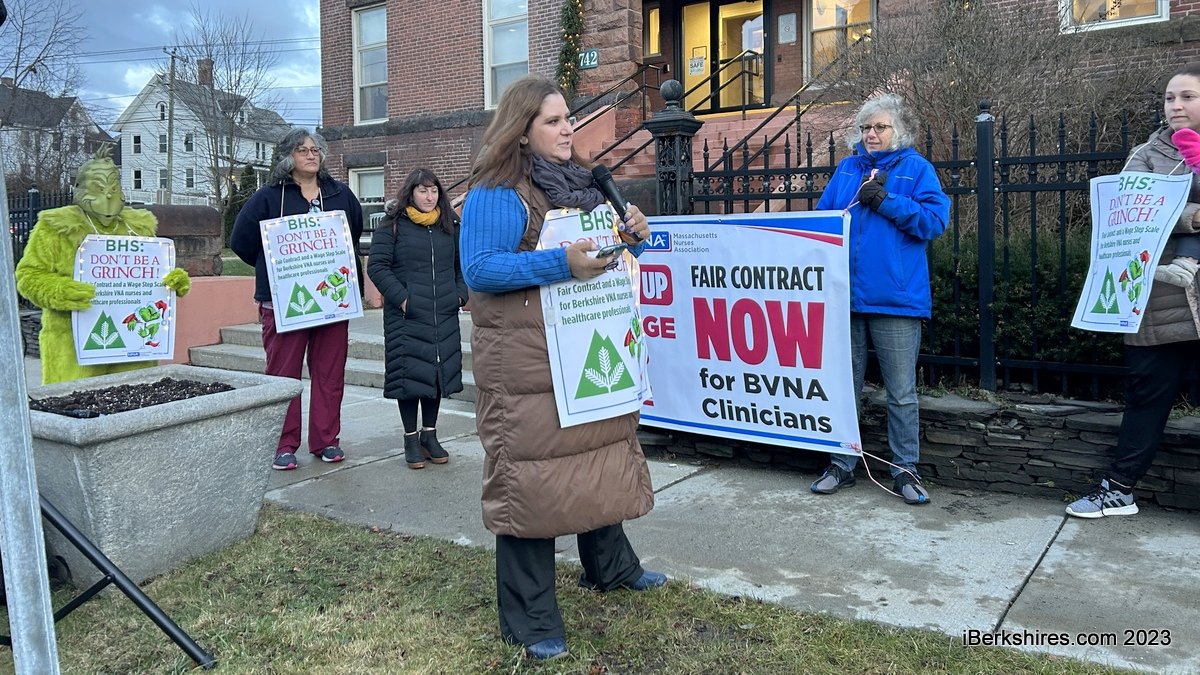
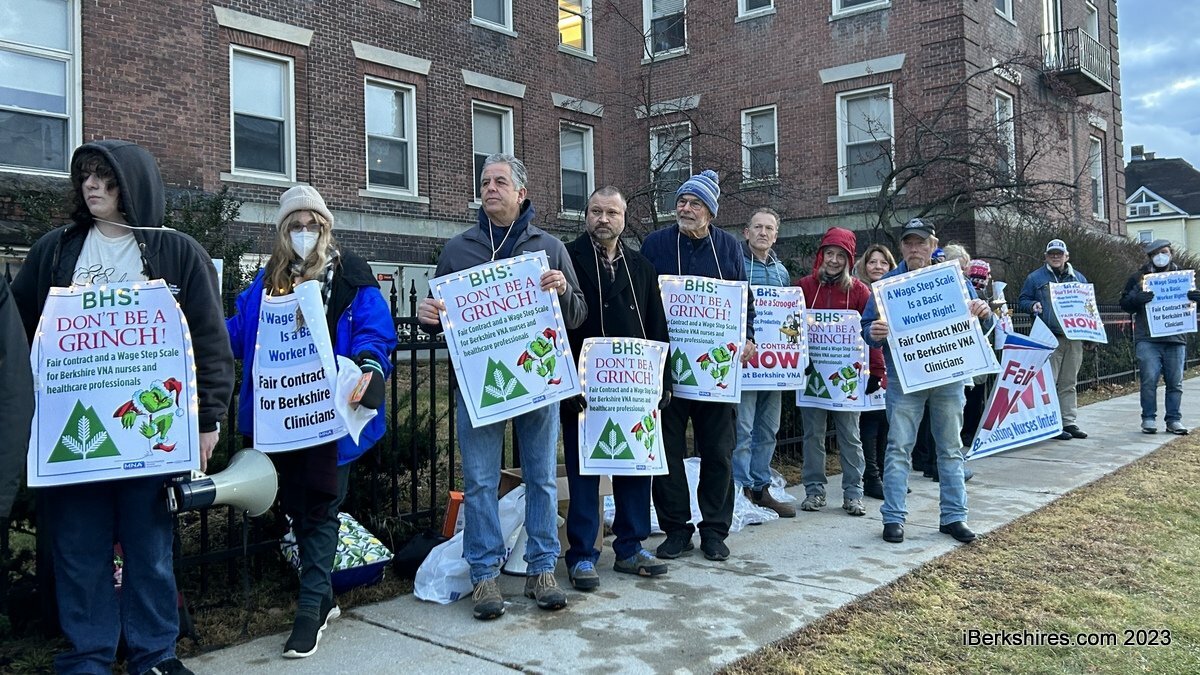
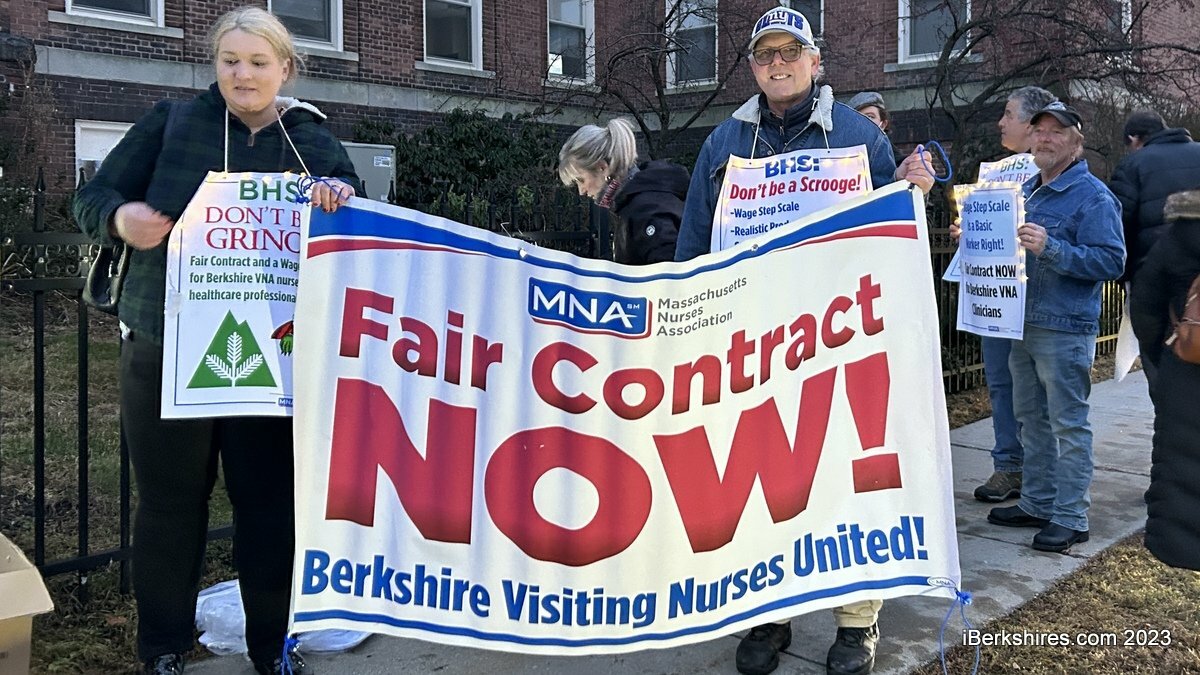
PITTSFIELD, Mass. — Unionized members of the Berkshire Visiting Nurses Association chanted "BHS you can't hide, we can see your greedy side" outside of Berkshire Medical Center during a picket for a fair contract on Monday.
Berkshire United, represented by the Massachusetts Nurses Association, is negotiating its first contract with Berkshire Health Systems and union members say they are pushing for fair pay and productivity standards. Members see this as crucial to preserve staff and quality of care.
"As workload expectations have increased dramatically, pay has not. Our nurses make $5 to $10 less an hour than the state average for home-care nurses. They can make $9 to $15 more an hour and have a wage step scale by going over to the hospital working for the same employer," said union co-Chair Tamaryn Clowdus.
"Berkshire VNA has gone from a department that seldom had a staff vacancy to a department that is fighting to hire and retain staff. They have lost 34 permanent staff over the past two years, 11 since August of this year. We have lost four physical therapists and haven't been able to hire any replacements for two years. Our agency used to manage caseloads of 600 patients and now we struggle to manage caseloads of 300."
BVNA registered nurses, and physical, occupational, and speech therapists unionized two years ago and have two main asks for the contract:
-
A wage step scale of the kind that MNA-represented nurses, health professionals, and other union members have in contracts throughout the commonwealth, including at BMC.
- Productivity language that reflects the reality of home care today and allows BVNA clinicians to spend an appropriate amount of time providing patient care and support and documenting.
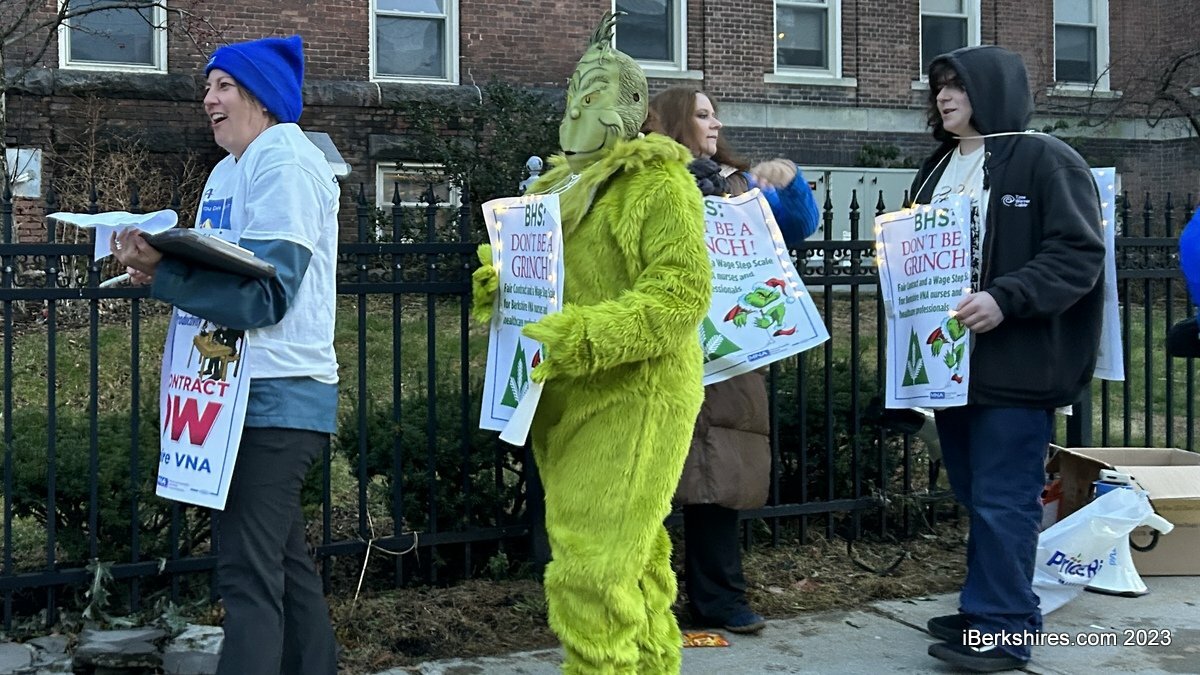
Supporters joined the picket on North Street with holiday-themed signs — including the Grinch himself with a sign that read "BHS don't be a Grinch."
Director of Media Relations Michael Leary said BHS deeply values its skilled and compassionate home care clinicians who are integral to the mission of advancing the health and wellness of everyone in Berkshire County.
"We respect our employees' rights to organize, along with their rights to free speech and assembly. As always, we are committed to working with both our Berkshire VNA clinicians and the Massachusetts Nurses Association in good faith," he wrote.
"We have been holding productive, respectful negotiations with the MNA for more than a year and have proposed wages that are competitive within the home-care industry and productivity expectations that are consistent with home-care industry standards. We remain committed to negotiating in good faith, and we are confident that we will reach a fair and equitable agreement."
Former BVNA employee Sarah Roberts decided to go back to the hospital after more than two years of what she described as long stressful days with ambitious quotas to meet, lots of traveling, and insufficient pay.
"After two and a half years I came to the point where I just decided that my family was more worth my time than my job and I came back to the hospital where I actually do have a work-life balance," she said.
"I do get to punch out and go home and home is home and work is work. This building is work and when I go home it's home. It doesn't cross paths anymore and that's very very important and I know that all of these clinicians who are amazing need the support and need the time and money that it takes to care for these patients."
Roberts said this job was by far the hardest one she has had in her life and union members are some of the best clinicians she has worked with.
"It's really, really, really time for BHS to pay these people what they deserve and give them the time that it takes to take care of families," she added.
Clowdus has worked in home care for around 20 years and has seen the workload become more demanding while caseload expectations remained the same. With one home care agency now covering all of the county, she said some clinicians are driving 50 to 100 miles a day, patients are being discharged the same day as surgery and hospital stays have decreased from 7.4 to 4.5 days, and Medicare has increased required Oasis time points (Outcome and Assessment Information Set) from 107 to 169 questions.
The time points require clinicians to answer more than 100 specific questions on data they collected during a patient's admission.
She said management has lowered the experience qualifications for nurses to allow for more hires but according to the state Board of Registration in nursing, licensed nurses rose by 24 percent between 2019-2022.
"Our agency is in a crisis," Clowdus said.
"We are here tonight to stand together, to fight together, to win. Not just for our members, but most importantly for our patients, their families, and our community, who deserve a fully staffed VNA that can provide the best and most comprehensive patient care."
Tags: BHS, contract negotiations, nursing, union contract,


