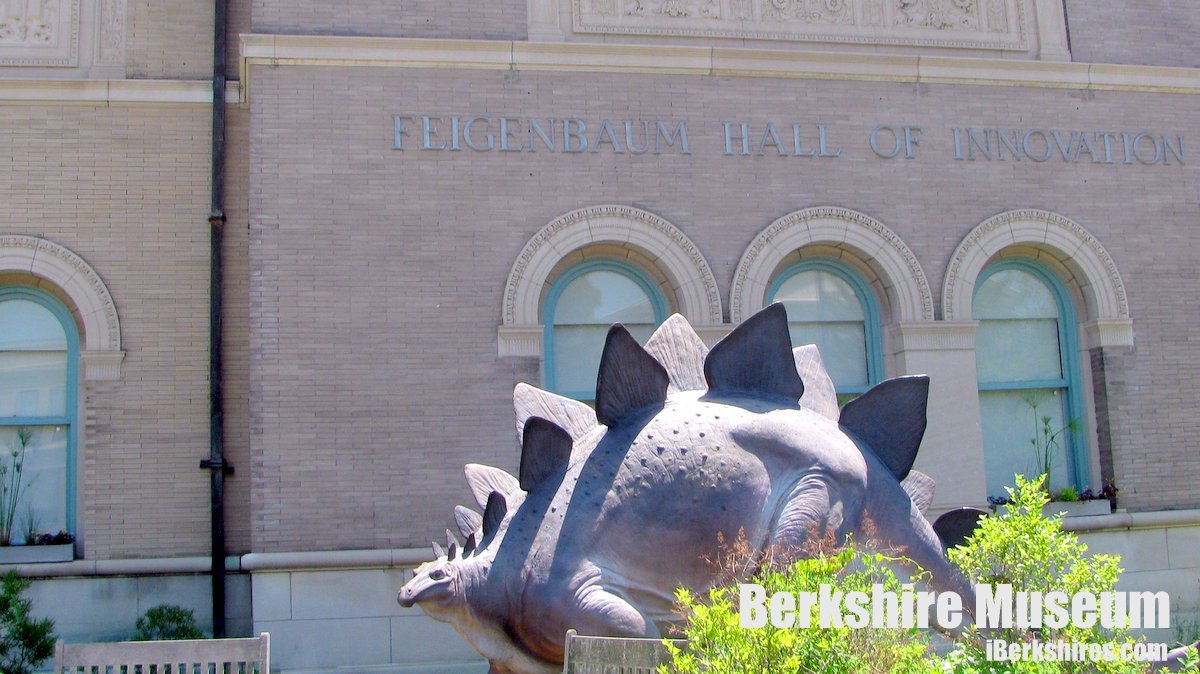
PITTSFIELD, Mass. — The Berkshire Museum has suspended its mask and vaccine requirements for visitors. Starting Monday, guests will not be required to wear masks nor show proof of vaccination.
This move follows guidance from the U.S. Centers for Disease Control and state and city health officials, who are no advising that indoor masking is no longer required because positive cases of COVID-19 have dramatically declined since the holidays.
The museum is among the first to drop all pandemic restrictions; a number of Berkshire institutions are still requiring masks and/or proof of vaccination, at least as of Monday. Public schools have already dropped their masking requirements or have set dates for those mandates to expire.
Pittsfield has dropped from red to yellow in this incident rate level and is reporting about 50 active cases in the city. About 76 percent of residents are now vaccinated.
Museum staff will continue to wear face coverings and encourage any unvaccinated visitors or those who have a weakened immune system or are at increased risk for severe disease due to age or an underlying medical condition or have someone in their household with a weakened immune system, to do the same, as recommended by public health officials.
"As we have done throughout the pandemic, we are following scientific evidence, striving to be good neighbors and community members, and adhering to the standards put forth by city and county leaders, and our public schools. We will continue to do so and recognize that this may be a temporary loosening of restrictions. We're all in this together, and we will continue to provide wonderful programming and exhibits to the entire community according to guidance from public health officials," according to a statement by co-Executive Directors Hilary Ferrone, Miriam Kronberg, and Craig Langlois. "We are grateful for the community's support and understanding of our previous admission restrictions as we sought to make every visitor's museum experience as safe as possible."
The museum's current exhibit is "Voyage to the Deep," based on French author Jules Verne's 1870 classic "20,000 Leagues Under the Sea." At the center of this fantasy world is Captain Nemo's submarine, a giant Nautilus in which kids can climb aboard and discover the inner workings of a deep-sea submersible and explore the captain's Cabinet of Curiosities full of marine specimens.
Adults only can party at the "(un)Beach Bash!" on Friday from 6 to 9 p.m. with Voyage to the Deep and the White Eyed Lizard Band. Tickets includes marine-inspired nibbles, tropical spirits, and a steel drum band. Admission is $50; members $40.
If you would like to contribute information on this article, contact us at info@iberkshires.com.
Your Comments
iBerkshires.com welcomes critical, respectful dialogue. Name-calling, personal attacks, libel, slander or foul language is not allowed. All comments are reviewed before posting and will be deleted or edited as necessary.
No Comments
Social Service Organizations Highlight Challenges, Successes at Poverty Talk
By Brittany PolitoiBerkshires Staff
Dr. Jennifer Michaels of the Brien Center demonstrates how to use Narcan. Easy access to the drug has cut overdose deaths in the county by nearly half.
PITTSFIELD, Mass. — Recent actions at the federal level are making it harder for people to climb out of poverty.
Brad Gordon, executive director of Upside413, said he felt like he was doing a disservice by not recognizing national challenges and how they draw a direct line from choices being made by the Trump administration and the challenges the United States is facing.
"They more generally impact people's ability to work their way out of poverty, and that's really, that's really the overarching dynamic," he said.
"Poverty is incredibly corrosive, and it impacts all the topics that we'll talk about today."
His comments came during a conversation on poverty hosted by Berkshire Community Action Council. Eight local service agency leaders detailed how they are supporting people during the current housing and affordability crisis, and the Berkshire state delegation spoke to their own efforts.
The event held on March 27 at the Berkshire Athenaeum included a working lunch and encouraged public feedback.
"All of this information that we're going to gather today from both you and the panelists is going to drive our next three-year strategic plan," explained Deborah Leonczyk, BCAC's executive director.
The conversation ranged from health care and housing production to financial literacy and child care. Participating agencies included Upside 413, The Brien Center, The Food Bank of Western Massachusetts, MassHire Berkshire Career Center, Berkshire Regional Transit Authority, Greylock Federal Credit Union, Massachusetts College of Liberal Arts, and Child Care of the Berkshires.
The federal choices Gordon spoke about included allocating $140 billion for the U.S. Immigration and Customs Enforcement, investing $38 billion to convert warehouses into detention centers, cutting $1 trillion from Medicaid over 10 years, a proposed 50 percent increase in the defense budget, and cutting federal funding for supportive housing programs.
Gordon pointed to past comments about how the region can't build its way out of the housing crisis because of money. He withdrew that statement, explaining, "You know what? That's bullshit, actually."
"I'm going to be honest with you, that is absolute bullshit. I have just observed over the last year or so how we're spending our money and the amount of money that we're spending on the federal side, and I'm no longer saying in good conscience that we can't build our way out of this," he said.
Upside 413 provided a "Housing Demand in Western Massachusetts" report that was done in collaboration with the University of Massachusetts at Amherst's Donahue Institute of Economic and Public Policy Research. It states that around 23,400 units are needed to meet current housing demand in Western Mass; 1,900 in Berkshire County in 2025.