
image description
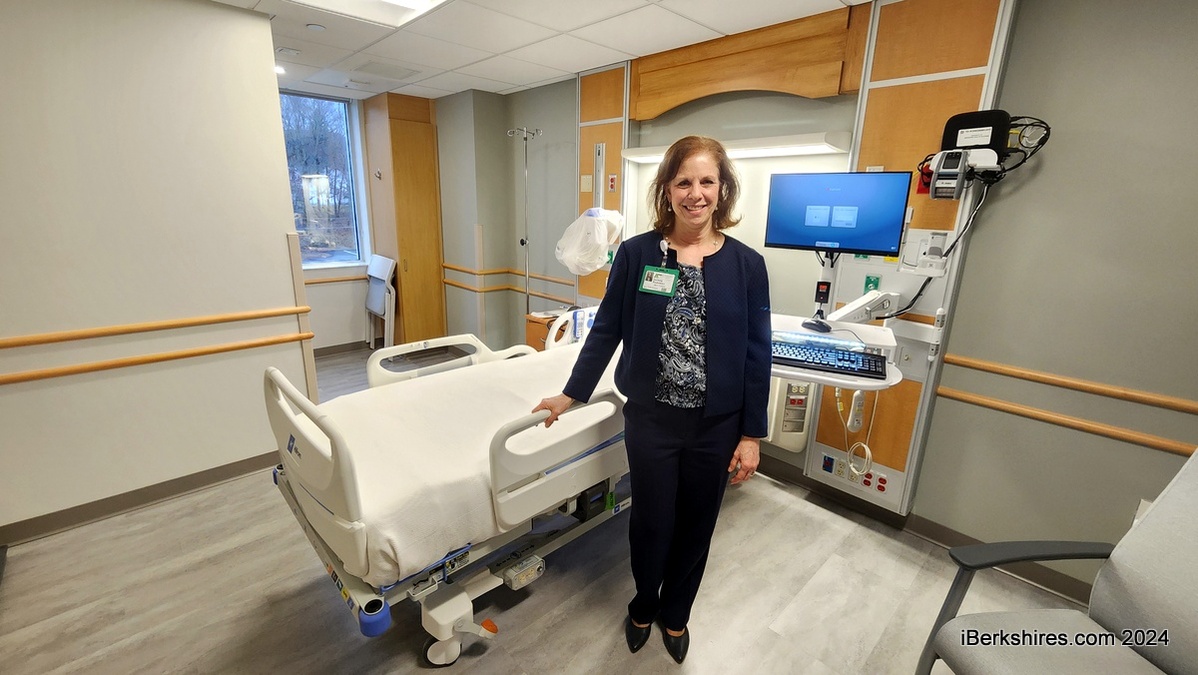
BHS president and CEO Darlene Rodowicz poses Thursday in one of the new patient rooms at what will become North Adams Regional Hospital.
image description
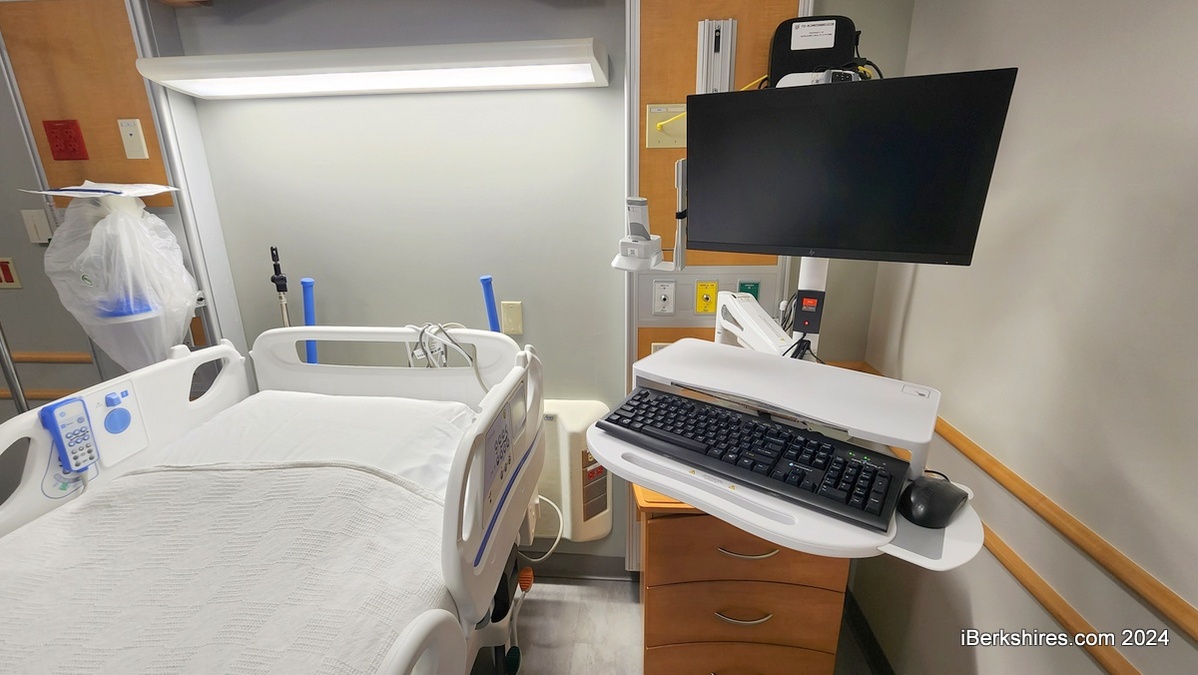
The new patient rooms have state-of-the-art equipment and new furniture. The nursing staff had input in the design and selections.
image description
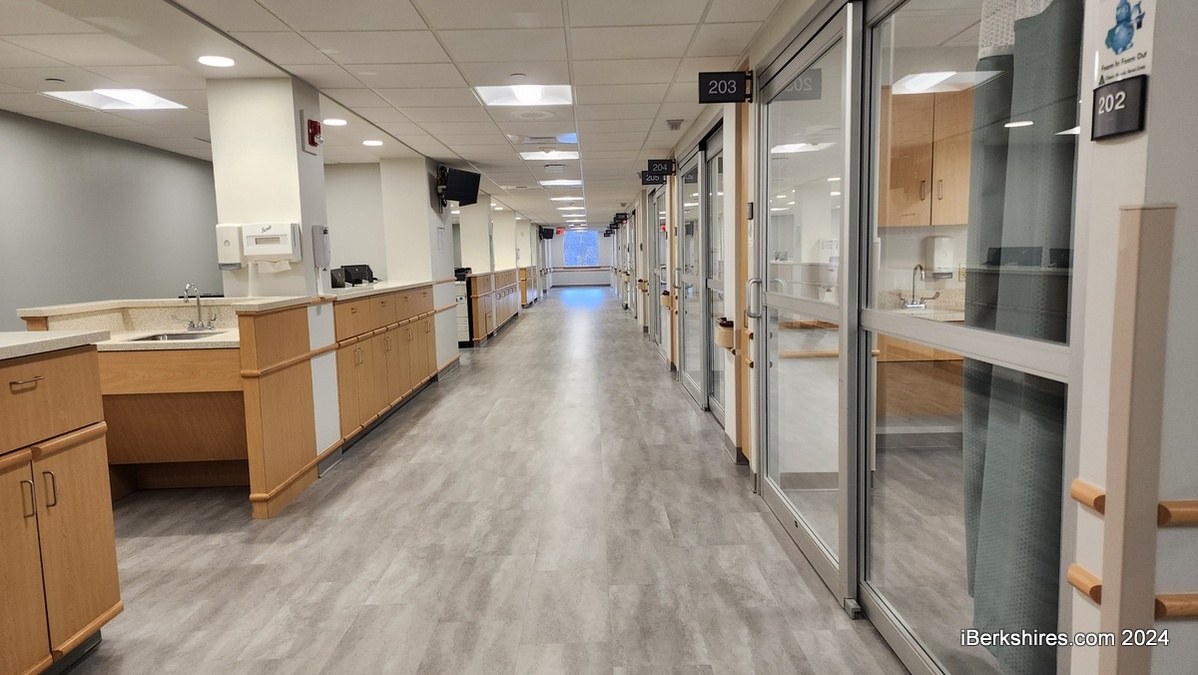
The nursing stations, left, face the glass doors of the private rooms.
image description
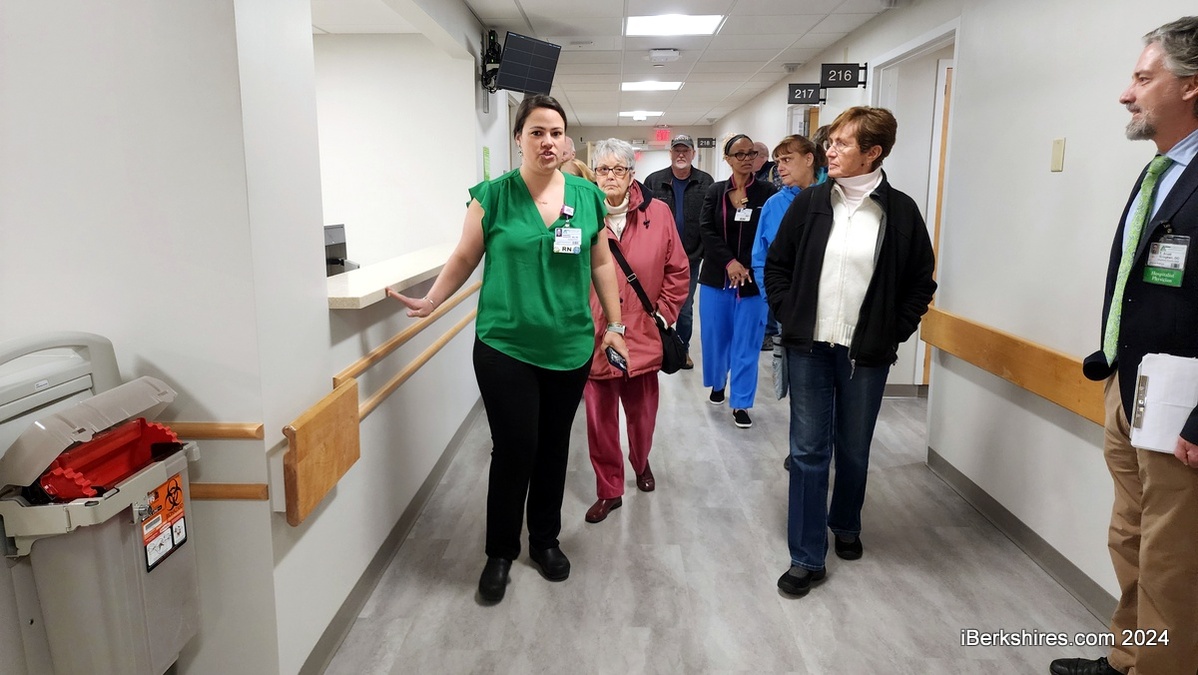
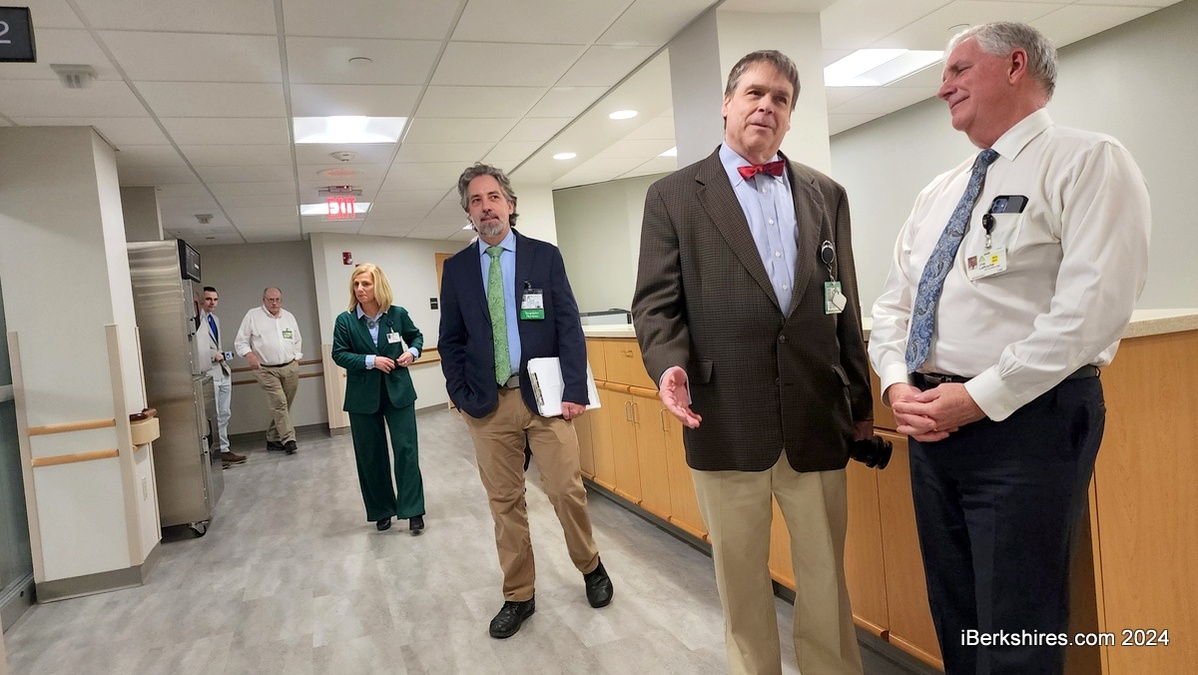
Staff lead tours through the hospital wing.
image description
image description
image description
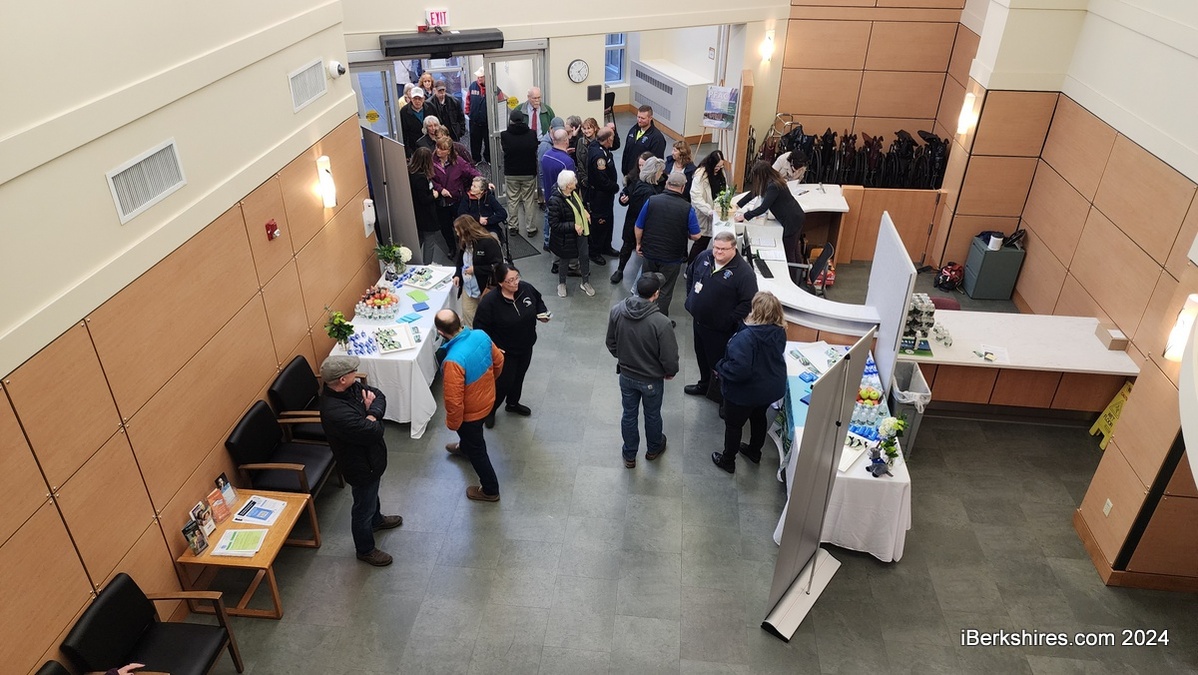
People enter the lobby during the community open house at BMC's North Adams Campus.

North Adams Hospital's Revamped 2 North Welcomes Community
By Tammy DanielsiBerkshires Staff
Print Story | Email Story

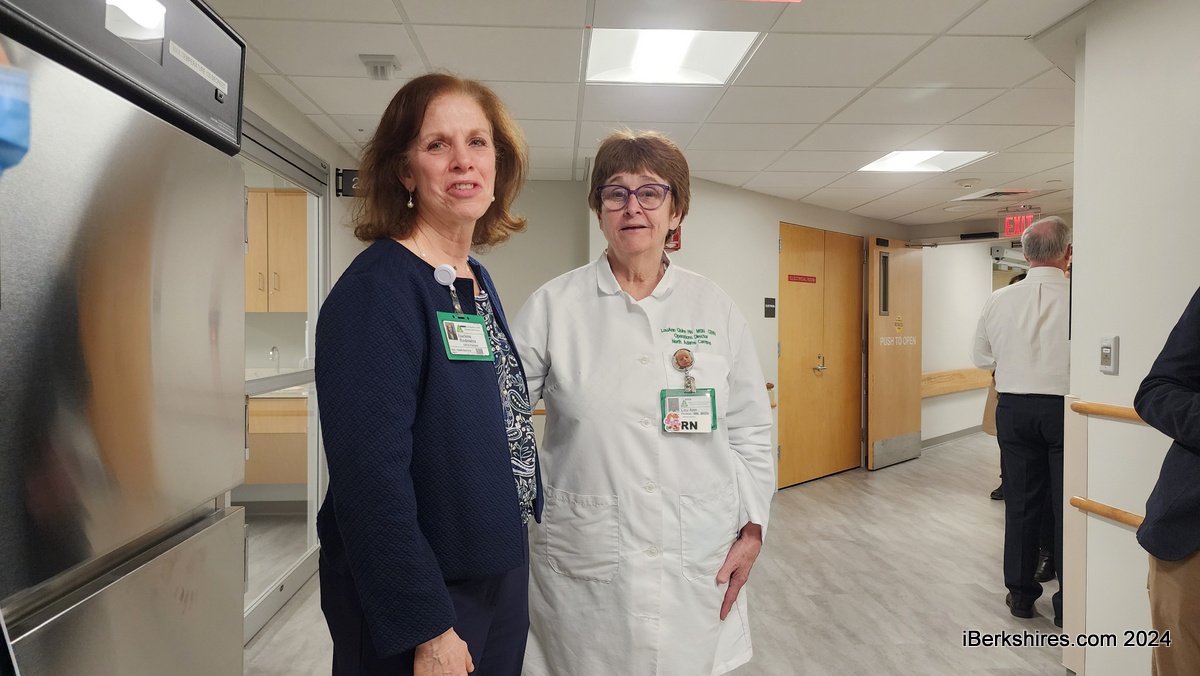
BHS President Darlene Rodowicz, left, and Lou Ann Quinn, nursing director of surgical services, the 'face of NARH.'
NORTH ADAMS, Mass. — The community turned out in force on Thursday night to see the changes made for the rebirth of North Adams Regional Hospital. 
 
"Absolutely beautiful. Absolutely beautiful. We've needed it for a long time. I'm happy to see it here," said Patricia Clairmont of Adams. "We used this hospital a lot for our X-rays and things like that."
 
Clairmont, who grew up on North Adams, was born in the "old" hospital and her children in this one. 
 
Her comments were echoed throughout 2 North as dozens of people walked through the wing to look at the refurbished hospital rooms ready and waiting for patients. 
 
"It's so exciting to be part of bringing this back to our community, and the support in the community, it's the excitement and it is their hospital," said Laurie Lamarre, vice president of North Adams Regional who had worked at the hospital before it closed. "It's great to bring expanded services ... you hear all those stories about transportation, and how difficult getting down to Pittsfield. And so to be able to provide care here, and expanded care, is great."
 
The upgrade is part of a $2.8 million investment by Berkshire Health Systems to prepare the building to resume operations as a critical care access hospital.
 
North Adams Regional Hospital closed 10 years ago this March when its health-care system went bankrupt. It was purchased by Berkshire Medical Center, which restored emergency and medical services to the campus and, last year, was able to pursue a "critical access hospital" designation that allowed it to reopen.
 
Darlene Rodowicz, BHS president and CEO, has been cautious about an actual date for opening since its pending several licensures and certifications, but believes it will be admitting its first patients by the end of this month. 
 
The facility's gone through a number of inspections, including a three-day survey last week for licensure. It's also waiting for the U.S. Drug Enforcement Agency and Massachusetts Controlled Substances approvals to be able to dispense meds. 
 
At that point, the newly opened hospital will have to take in two patients each for a 48-hour stay. The Department of Public Health, on behalf the U.S. Centers for Medicare & Medicaid Services, will do final review and the hospital will be cleared for federal reimbursements. 
 
"We want to work out our bugs and our processes in a new building," Rodowicz said. "So three or four patients, I think initially, and they'll be inpatients and observations. For the survey, they have to be inpatients for a two-night stay."
 
Senior Director of Clinical Operations Robert Boebert said they'll also be doing some internal drills, running several "patients" through the complete process from admission to surgery or treatment to discharge to billing, including with Northern Berkshire EMS.
 
"I think one of the important things is that you have the multidisciplinary team, right, so from the lab to pharmacy to therapy — it will be here to support and address anything that has a failure at that point," he said.
 
"Every little detail that we can think up on how we bring patients here and how we discharge patients, just going to go through process."
 
Admissions will be slowly expanded to up to 10 though the hospital's designation as a critical-care access facility allows for 25 beds. The rooms on 2 North, which had two- and four-bed wards as well as intensive care, have been converted into 18 private rooms, most with bathrooms.
 
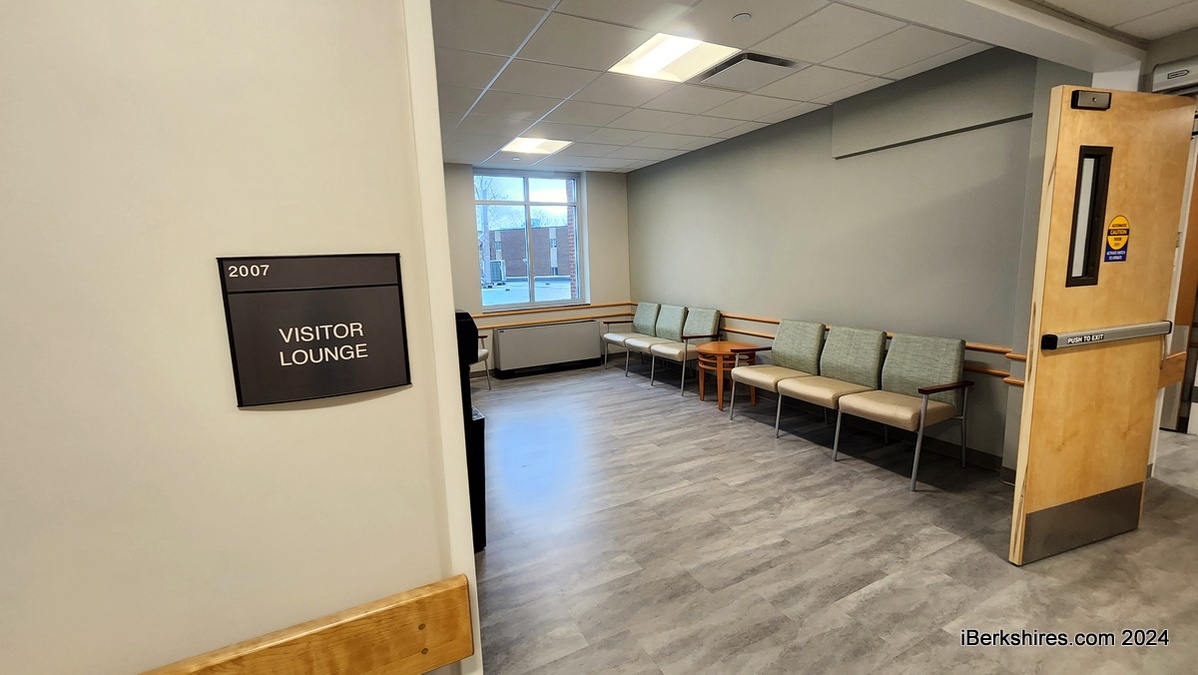
Each room also has a window, new headwall systems (architectural features that carry electric, gas and other needs) and computers, the capability for telemonitoring, and large sliding glass doors that block noise for the patient but allow for observation by medical staff. The nurses' station runs parallel to the rooms and new elements include a charting station for doctors, an accessible shower, storage and refreshed visitor's lounge. 
 
The entire floor's been freshened with flooring, paint, wallcoverings and woodwork and the elevator closest to the wing (closed for several years) has been replaced. 
 
Hidee Taylor, a certified nursing assistant, is new to the hospital but excited to begin working in the unit. She'll be the unit assistant, a combination of administrative and clinical functions, and has plans to become a nurse.
 
"It's a beautiful floor. I think everybody's going to be wonderfully cared for," she said. "I'm super excited about my new position."
 
For Lou Ann Quinn, described by Rodowicz as the "face of NARH," it's a chance to see the hospital return before she retires.
 
"This is exciting. This is just everything to me," said Quinn, nursing director of surgical services. "When the hospital closed, I had opportunities to go anywhere. And I chose to stay with my community and I was honored that Berkshire Medical Center hired me to kind of be that transition person. ...
 
"It's an honor to see this process happen because I think we're going to do the best for the patients."

Tags: NARH,   

If you would like to contribute information on this article, contact us at info@iberkshires.com.

Why the Massachusetts Art Community Is Worth Continued Investment

By James BirgeGuest Column
How do we quantify the value of art on society and culture? Even eye-popping figures, like the $100 million estimate for the jewels stolen from the Louvre, or the record auction last fall that saw a piece by Gustav Klimt sell for more than $236 million can't fully account for the value of the history, stories, and emotions behind the creations themselves. But beyond that, there is a measurable financial, cultural and social benefit of the arts that is often taken for granted. 

Closer to home, arts and cultural production in the Commonwealth of Massachusetts totals nearly $30 billion annually, representing more than 4 percent of the state's economic output, according to the Mass Cultural Council. All told, more than 130,000 jobs are spread across the commonwealth creating a vibrant and thriving artistic community for us all to enjoy. 

Despite the obvious impact, these figures are under threat. A recent survey by MassCreative compiled recent federal cuts to the National Endowment for the Arts, the National Endowment for the Humanities and the Institute of Museum and Library Services and identified 63 grants canceled and $4.2 million in grant funding rescinded across New England so far this year. 

The dollars, of course, are important. But they also only scratch the surface on what they bring to the community. Today, we risk losing part of the culture and identity many now take for granted. 

While others choose to look past these less tangible, but just as vital benefits, we're doing the opposite. Massachusetts College of Liberal Arts is all in to ensure the next generation retains their access to works of art, while also being empowered to create themselves. 

Last fall, MCLA officially broke ground on the new Campagna Kleefeld Center for Creativity in the Arts, which will serve as a new hub for the campus and the local community for arts programming. When complete in fall of 2027, our students will benefit, but so will all of Berkshire County and artists in the surrounding area. 

This exciting new facility is just one of the many forthcomings our region can enjoy in the coming years. Just a few miles away, anticipation builds for the Fall 2027 anticipated opening for the Williams College Museum of Art. Years in the making, the museum likewise grows from an enduring commitment to the arts, both in curriculum and in practice. Exciting times are also underway for the Clark Art Institute with the construction of a new facility to house a collection of 331 works of art, including paintings, sculptures, drawings and other works. Their wing is scheduled for completion in 2028. And listeners will no doubt enjoy the sounds and melodies from Mass MoCA Records, the latest endeavor to foster creativity and artistic pursuits through music launched in October as well. Of course, many are also awaiting the reopening of the Berkshire Museum anticipated this summer, after a tremendous renovation process to rejuvenate the experience for visitors. 

So much time, energy, and yes, dollars, have already been invested in taking these facilities from ideas and sketches and making them reality. But they represent much more than new buildings. They represent new opportunities to cultivate and accelerate the thriving arts community in Massachusetts and the northern Berkshires. 

Art, regardless of the medium, is a reflection of who we are, where we've been, and what we aspire to be. It can be inspired by hopes or fears and chronicle collective triumphs as well as tribulations. The goal of art is not only to document history, but to inspire those positioned to change it and to feel something new or even to provoke us to revisit our own assumptions or misconceptions. 

As unfathomable of a number as $30 billion can seem, boiling down the impact to any number inherently discounts the unknowable downstream effects our graduates will bring to the community and the broader world after they leave our institutions. Likewise, rescinding $4.2 million now removes a huge chunk of that growth potential.  

Justification for making these investments today when simply boiled down to dollars and cents still places us on solid ground strictly from a financial perspective that forgoes all of the intangible, but no less valuable, benefits as well.  

The arts are still worth our support. And our community will be richer for it. 

James Birge, PhD, is president of Massachusetts College of Liberal Arts in North Adams.  


View Full Story

More North Adams Stories