
Williams College Endowment Shrinks by $400M
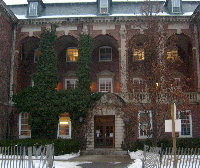 |
| The Stetson Hall library project is on hold until at least next fall. |
"I am enormously pleased and thankful that we have found ways to control spending while supporting the finest possible education of our students," writes interim President Bill Wagner in a letter to the college community explaining the financial circumstances. "... we have made good progress in meeting the challenges created by changes in the world economy."
A year ago, the nation's prime liberal arts college was flush with funds and in the midst of major building spree that would transform the campus between Chapin and Stetson hall.
The new $38 million North and South academic buildings had just been completed and Stetson was about to get a major makeover to replace the out-of-date Sawyer Library.
A month later, the $55 million library project was on hold and the college was suddenly pinching pennies as the global economy circled the drain. A spending plan was put into effect almost immediately and an ad hoc advisory committee formed to help Williams through the next few years while maintaining its commitment to students and its educational mission.
The college's endowment was $1.8 billion on June 30, 2008; this past June 30, it was $1.4 billion. The total includes lost investment returns because of the down capital markets, spending and also the inclusion of gifts to the school. Plus the markets began to rebound somewhat in early spring and summer, bouying the fund.
"It's a stunning change of circumstances," said James Kolesar, assistant to the president for public affairs, on Thursday. "If you go back to February, you would have expected it to be lower."
Williams' operating budget for this year is about $12 million less than last year. Savings were made through salary freezes, a decrease in staff and faculty through attrition and the postponement of capital projects, the borrowing for which would have affected the operating budget. The college was able to avoid any layoffs.
It is also instituting a number of changes, some minor and some prompted by its push for sustainability that also have the side benefit of saving money, such as switching its catalog and handbooks formats from print to digital.
"We're still in a mode of trying to save money," said Kolesar. "We need to get that spending under control."
The return on the endowment fund over the past year is estimated at minus-18.4 percent and the markets are down more than 26 percent. Wall Street could stumble again.
The board of trustees has approved spending 5.6 percent of the endowment this year based on the June value, said Wagner.
"However, even in the medium run we cannot maintain that figure without financially endangering future students, faculty, and staff," he writes. "We have to get it back to a sustainable level in as few years as possible, as previous generations have done for our benefit. This level, while not without fluctuations, historically has been roughly 5 percent or below."
Kolesar said spending above 5 percent would inevitably affect students in generations to come. "It's like eating the seed corn and the future students pay a price for that," he said. "You can't do it for very long."


