
Independent Investor: Why Americans Should Become Detroit's Long-Term Investors
 |
No way should Americans walk away from this at a loss. The solution is simple. We should swap whatever bad debt remains into equity and just sit on it.
This oversight panel was created by Congress last year to oversee the $700 billion Troubled Asset Relief Program (TARP) and I suspect there is a lot of political pressure on them to get out of the auto business. Readers may recall several columns I have written about the trials and tribulations of General Motors and Chrysler as well as my doubts about these taxpayer investments. Still, a lot of jobs were at stake including those at local dealerships, so I grudgingly went along with the U.S. government's investment in American manufacturing.
The U.S. Treasury now estimates that about $23 billion in loans are doubtful and in particular, $5.4 billion of loans to Chrysler are "unlikely to be recovered." The reason officials give is that the initial loans were given while the company was imploding and before a restructuring plan was in place. So what! I say rather than write it off, convert that $23 billion to equity along with the stock we already own in the companies.
That's exactly what foreign banks did in Latin America back in the lost decade of the '80s. At that time, various South American companies and governments could not repay their debt to Western banks. It looked like billions in loans would have to be written off causing many global bank balance sheets to take a devastating hit. Instead, Citibank, among others, came up with a solution. The money-center banks, together with the Federal Reserve and IMF, suggested a seven-year workout period from 1983-1989 where loans were rescheduled and a massive debt-for-equity swap was master-minded throughout the region.
It took a decade before the loans were paid off while in the meantime thousands of companies, both private and state-owned, swapped debt for stock which ended up in the hands of banks who, by default, became long-term investors in these struggling economies. Then, in the early '90s, investors "discovered" emerging markets including Latin America. Bolsas (stock markets) from Mexico to Chile took on new life; doubling, tripling and then quadrupling over the next several years while the equity banks had received for pennies on the dollar was suddenly worth billions.
Now, as we like to say in the money management business, the past is no guarantee of future performance, yet there is a chance if we have a little patience here we too could walk away with a big return. Besides, what do we the taxpayers have to lose? Sure, I know there will be some that say the government has no business becoming the major shareholder in American auto companies and should exit this investment at the earliest possible time. Some will even say it is un-American if we don't. I say it's a little too late for those attitudes. The horse is already out of the barn. So go ahead and call me a socialist. I say we took a huge risk when no one else would, and we deserve a commensurate return on this investment.
Now that presumes I have some faith in the future of the American auto industry, and I do. All I have read concerning the on-going restructuring taking place in research and development, in manufacturing processes, and management structures indicate to me that the Big Three are getting their act together. Ford is clearly on the right path and so are GM and Chrysler. After all, none of them have lost their main competitive edge — American labor and ingenuity. I’ll bet on that. So let’s hang in there. I believe a little patience will pay off for all of us down the road.
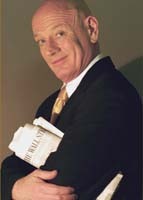
Bill Schmick is a registered investment adviser and portfolio manager with Berkshire Money Management (BMM), managing over $180 million for Americans in the Berkshires. Bill’s forecasts and opinions are purely his own and do not necessarily represent the views of BMM. None of his commentary is or should be considered investment advice. Direct your inquiries to Bill at


 1-888-232-6072
 (toll free) or at wschmick@berkshiremm.com. Visit www.afewdollarsmore.com for more of Bill’s insights.
Anyone seeking individualized investment advice should contact a qualified investment adviser. None of the information presented in this article is intended to be and should not be construed as an endorsement of BMM or a solicitation to become a client of BMM. The reader should not assume that any strategies, or specific investments discussed are employed, bought, sold or held by BMM.


