
Do You Have What It Takes to Be a Clark Docent?
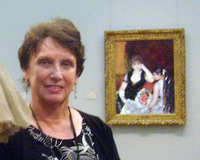 |
It seemed like "a good venue" for an art lover, so she gave it a try. That was 15 years ago.
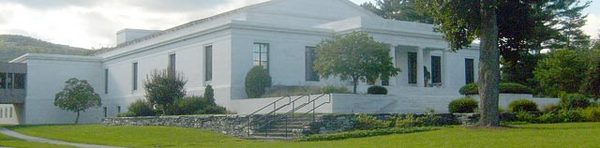
"It's a wonderful place to work," said Massery last week, as she took a break from manning the information desk in the lobby of the Sterling and Francine Clark Art Museum. When she's not on the desk, she's guiding school groups around, and admits to spending more hours than she plans within the walls of the museum the Clarks built more than 50 years.
And she does it for free — and for the love of art.
Massery is one of the museum's docents, a volunteer group whose members impart their knowledge of the museum's extensive collection to the thousands of visitors — especially the many children — who visit the Clark Art each year.
"We have docents who know the collection so well," said Danielle Steinmann, assistant curator of education. "The program really works."
There are 15 or so active docents at the museum, some with more than 30 years experience. But while the experience level is high, some retirements mean the numbers are too low to cover all the museum's needs for the upcoming school year. Steinmann said the Clark is looking for at least five more volunteers willing to give gallery talks three times a week.
 Danielle Steinmann, left, assistant curator of education, and docent Sonny Massery pose with Degas' 'Little Dancer,' Massery's favorite work at the Clark Art Institute. Danielle Steinmann, left, assistant curator of education, and docent Sonny Massery pose with Degas' 'Little Dancer,' Massery's favorite work at the Clark Art Institute. |
"I prefer to do children," said Massery, because of their curiosity and perceptions. "You'll always have that child who sees something you never noticed."
She recalled a precocious young boy whose frequent questions strayed from the artwork to her photo badge. "He said, 'That looks like it was taken a few years ago,'" she laughed.
There's more to being a docent than just giving gallery talks and tours, said Steinmann. There's training involved, and the volunteers have to be up on what's on exhibit and what's not. Pieces in the collection can be moved, or new exhibits brought in.
Talks are often planned around teachers' needs for their charges, including children in prekindergarten. That could mean focusing on color or a particular period or group of artists, lessons the docents help craft.
It's a constant learning experience for the docents.
"The other docents bring so much to the table so you really learn a lot," said Massery, who took art lessons for years. Among the docents are retired teachers, bankers, art lovers, interested people who live near the museum — and not so near.
Steinmann said each brings a different set of skills to their work but all docents need a certain "je ne sais quoi" for the job.
First, you have to be able to commit to at least three one-hour gallery talks a week plus training sessions. Second, you have to be flexible — because you never know what you're going to run into — and aware of your audience. You have to be able to interact with the audience, not lecture them. The goal is to expand the visitors' understanding of the cultural, social and historical context of the works.
A background in art history is preferred but not required. If you don't have that background, you would be expected to audit some college courses at Williams College and Massachusetts College of Liberal Arts. (The museum also uses interns from both colleges.)
Potential volunteers are required to submit a cover letter and resume. Depending on the size and quality of the applicant pool, five or more potential docents will be selected for introductory training in October.
But the perks, said Massery, are priceless. The ID card means free admission into any museum in the country and a discount in the Clark bookstore and gift shop. Plus, you go to work every day in a building full of masterpieces.
More importantly, there's that thrill when a child has a eureka moment.
"I remember the day when I was taking a class through. I told them every painting had a story and they each had to write one," said Massery. "This one boy was surprised he could do it. He was so excited. 'I didn't know I do could do this,' he said. But he wrote this beautiful story."
"It's worth it every time you get that little gift."
To apply to become a docent, send a resume and cover letter to Steinmann at dsteinmann@clarkart.edu, by faxing 413-458-2336, or mailing to Danielle Steinmann, The Clark, 225 South St., Williamstown MA 01267. The deadline is Sept. 15.


