
Go to Health!: Don't Blame Your Genes
 |
You know the lineup: cardiovascular disease, cancer, diabetes, osteoporosis, obesity and Alzheimer's disease. Not to mention genetic theories relative to autism, ADHD, depression, bipolar disorder, schizophrenia and alcoholism.
And, I am sure, in the near future, the disease "concoctions" — erectile dysfunction, restless leg syndrome, sleep disorders, etc., that are marketed and sold to more and more of us each year — will also be revealed as having a genetic origin.
Isn't it interesting that 100 years ago, almost all, if not all, of these diseases (except for alcoholism) were rarely, if ever, seen in a doctor's office? Why is that?
Obviously, it is because our genes are not defective and are not the cause.
One would have to believe that our genetic blueprint, which hasn't changed in 40,000 years, quite suddenly and dramatically deteriorated in the past 100 years. But genes don't work like that; evolution takes time and selects for survival.
And, if there is an obesity gene, how come obese people can lose weight, but can't change their eye color? If it is genetic, how can Type II diabetes be cured, depression overcome, and heart disease largely reversed? And how come some women with the "breast cancer gene" get cancer, while others don’t? That sounds more like "bad luck" than "bad genes."
Genetic diseases such as Down's syndrome, hemophilia, cystic fibrosis, sickle cell disease and others are 100 percent. They affect 100 percent of those with abnormalities in their genes or chromosomes that occur at conception. Fortunately, they are also relatively rare.
If not defective genes, what is it? Genetic predisposition?
Your genes are active your whole life. They are how your body interacts with our world. To that extent, everything, including all disease, is genetic. However, genes are not autonomous. They are "expressed," "turned-on" or "off," in response to environmental stressors/stimuli as your body's innate and perfect physiological adaptation response attempts to maintain balance (homeostasis), ultimately, to save your life. Therefore, genetic predisposition always requires exposure to an environmental stressor — emotional, chemical or physical.
While some of us may have lower thresholds of exposure for the expression of disease, exposure is essential. For instance; they claim there is a gene for hangover that predisposes one to hangovers. However, hangover can only occur if one drinks alcohol. Without the exposure, the hangover will never happen.
Family history is more a matter of exposure (both environment and learned behaviors) than genes. And, the environment starts in the womb.
For example; an obese mother, typically, is malnourished. The fetus's genes adapt to this environment by creating a storage mode, thus predisposing the baby to obesity. When born, the baby will probably grow up in a family environment with poor eating habits and a sedentary lifestyle, further encouraging obesity. It is not defective genes or programmed obesity.
We live in a toxic world that constantly assaults and taxes our genetic defenses.
Some exposures, like water and air pollution, we can't avoid. Our foods are filled with herbicides, pesticides, fungicides, antibiotics, hormones, chemical additives, preservatives and much more.
We coat ourselves with personal-care products loaded with chemicals, in toothpastes, shampoos, soaps, deodorants, hair sprays, gels, makeups, colognes, sunscreens and more. We live in houses filled with chemical cleansers, detergents, out-gassing carpets and paints and we work in factories or offices replete with toxins. And, we take vaccines and tons of drugs. Almost all of the above contain chemicals that are known carcinogens.
It is way too easy, convenient and profitable to blame our genes and not our environment or lifestyles. That way we have no personal responsibility or recourse. If we believe it is genetic, there is nothing we can do about it but take a pill or have surgery.
Your lifestyle has far more to do with your health than genetic predisposition. In reality, you can alter your genetic health, for better or worse, by your lifestyle choices based on the decisions you make every day in how you think, in the food choices you make and in the amount of exercise you get.
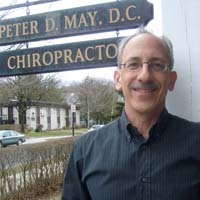
Peter May is a doctor of chiropractic and a local resident with a practice in North Adams. He writes a monthly column on health.


