
Planning a Summer Trip? Consider a National Park
 |
| Photo Courtesy of ARA |
Home to a wide variety of American ecosystems, the national parks serve as examples for how global warming is affecting our entire country. The parks offer not only a chance to witness the effects of global warming, but also an opportunity to discover how individuals can help prevent further damage.
Last year, the National Parks Conservation Association (NPCA) released “Unnatural Disaster,” a report about global warming and the national parks. The report highlights multiple examples of how global warming is already impacting our parks, but also demonstrates how the most severe effects can still be halted if both individuals and the government act quickly.
“Many of the national parks are already feeling the effects of global warming,” says NPCA director of Clean Air and Climate Programs Mark Wenzler, who produced “Unnatural Disaster.” “Visiting the parks should inspire us to do something before it’s too late. Congress and the Administration must continue to work toward cleaning up dirty, coal-fired power plants and investing in new climate-friendly technologies. Our country’s heritage is depending on it.”
While many travel columns offer “Places to Visit Before You Die,” NPCA has highlighted several national parks to visit before they die. Here are a few parks that NPCA’s Wenzler urges travelers to see before global warming takes its toll:
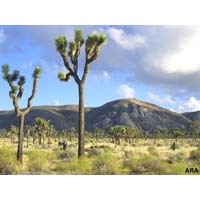
Joshua Tree National Park (Calif.) is one of the jewels of the Mojave Desert in Southern California. The park is home to a wide array of plant and animal species, including the "jumping" cholla cactus, the desert bighorn, and the desert tortoise. But it is most well-known for its namesake: the Joshua tree. The park may need to consider changing its name at the end of this century, as the beloved tree is expected to slowly disappear. Joshua trees need the temperature to drop to a certain mark in order to reproduce, and according to NPCA’s report, that is less likely to happen due to global warming. The change will damage the entire ecosystem of the park, as invasive grasses move into the region to replace them. For more information on visiting Joshua Tree, please go to www.nps.gov/jotr/.
In Alaska, the Mink Island archaeological site is located off the southern shore of Katmai National Park & Preserve (Alaska). The area is home to the remnants of native settlements stretching back 7,200 years, but they are beginning to erode as sea levels rise and storm activity increases. The park is well known for salmon fishing, both by brown bears and sport fishermen, but scientists warn that the ocean may become too warm to support healthy, wild salmon populations by mid-century. For more information on visiting Katmai, please go to www.nps.gov/katm/.
Great Smoky Mountains National Park (Tenn., N.C.) is the most visited national park in the country. The park is home to a thriving recreational fishing economy. But, even a slight increase in temperature could eliminate 80 to 90 percent of trout habitat in the region. Rare and ancient forests, remnants of the last ice age, may be threatened by increasing ground-level ozone and insect pests, brought about by warming. For more information on visiting Great Smoky Mountains, please go to www.nps.gov/grsm/.
On the shore of Lake Superior, Apostle Islands National Lakeshore (Wis.) is experiencing global warming problems of its own. With the water level in Lake Superior decreasing, boating facilities must be redesigned and replaced in order to maintain park visitors' enjoyment and safety. For more information on visiting Apostle Islands, please go to www.nps.gov/apis/.
Rocky Mountain National Park (Colo.) is known by most Americans for its natural, majestic beauty. Elk, mule deer, moose, bighorn sheep, coyotes and black bears are just a few of the types of animals that make their home in this park near Denver. The park is currently experiencing rising temperatures and diminishing snow pack, which is causing trees to take over high elevation alpine tundra. The change puts at risk animals that have adapted to this kind of ecosystem. The park is also experiencing increased wildfires, which may lead to closures of the park to visitors. For more information on visiting Rocky Mountain, please go to www.nps.gov/romo/.
Ellis Island National Monument (N.Y.) opened in 1892 as the nation's premier federal immigration station. More than 40 percent of Americans can trace their ancestry through the site, which is currently a museum. Today, immigration records need to be removed from the park, as they are threatened by rising seas caused by global warming. For more information on visiting Ellis Island, please go to www.nps.gov/elis/.
For those who do not already know, Everglades National Park (Fla.) is facing some of the more serious effects of global warming. More powerful hurricanes combined with sea level rise could destroy park buildings and roads, hampering visitor access. By the end of this century, we could see the entire park completely under water. For more information on visiting the Everglades, please go to www.nps.gov/ever/.
Like Joshua Tree, Glacier National Park (Mont.) might also need to consider changing its name. The glaciers that the park is famous for are slowly disappearing, and could completely disappear in just a few decades. For more information on visiting Glacier, go to www.nps.gov/glac/.
Courtesy of ARA content


