
Vincent Plans $7M Bequest for Williams Fellowship
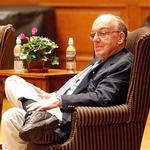 |
| Fay Vincent [File photo] |
College to support undergraduate scholarships and to create a new graduate fellowship.
The Flynt Fellowship, named for longtime Williams administrator and alumnus Henry N. "Hank" Flynt Jr. of Williamstown, will be awarded annually to a Williams senior or recent graduate to defray the cost of graduate or professional school.
"This remarkable gift will help some of our best students achieve their educational dreams beyond graduation, extending their ability to change the world in profoundly positive ways," said Williams President Morton Owen Schapiro.
Flynt ran the college's financial aid operation from 1950 to 1980 and remained involved with aspects of it for years afterward. Generations of Williams financial aid students have expressed their indebtedness to him, not only for the funds he provided them but for the individual care with which he did so.
Williams already awards several graduate fellowships each year, most of which support students going on to Oxford or Cambridge Universities in England. The Flynt Fellowship will be available for graduate study anywhere, and can be used for professional degrees as well as doctorate programs.
"My commitment to undergraduate scholarships is personal and heartfelt," said Vincent, who was himself a scholarship student while at Williams from 1956 to 1960.
"Hank Flynt made us proud to be among his group of scholarship students and gave us support in many ways, not just financially," he said. "In addition, I hope this graduate fellowship will further enhance Williams' appeal to the best and brightest students."
Flynt has long been active in the community, including volunteering with the House of Local History and serving on the Williamstown Theatre Festival's board of directors.
The major share of the Vincent gift will come after his death, but he has pledged to provide annual funding for the Flynt Fellowship throughout his lifetime so it can be taken advantage of before it is fully endowed.
Vincent, a former Williams trustee, lives in Florida and spends summers in Williamstown. He frequently speaks at Williams, most recently in conversation with Bob Costas last October.
Williams admits students without regard to their ability to pay and promises to meet 100 percent of the demonstrated financial need of all admitted students for four years. Beginning with the next academic year, the college also will eliminate loans from all of its financial aid awards and replace them with larger grants.


