
North Adams Plans Hearing on Blighted Properties
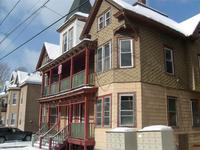 |
| 223-225 East Main St. is set to be declared a public nuisance. |
"We have taken every step humanly possible to try to get them to do something," Mayor John Barrett III told the City Council on Tuesday night. "I'm sure in two weeks someone will be here praying for mercy ... praying that they be given more time.
"The council sometimes has given the property owners additional time ... every time the City Council gave additional time to these landlords, nothing was done."
At the mayor's request, the City Council set a public hearing for Tuesday, Feb. 26, at 7:30 p.m. to declare the first five buildings public hazards. That will give the city the authority to raze the structures, many of which have been condemned.
The buildings are at 80 1/2 Prospect St., owned by the estate of Jessie Vallieres; 34 Harrison Ave., owned by Arthur Boucher; 34-40 Arnold St., owned by Franklin Perras; and 223-225 and 229-231 East Main St., owned by Charles "Rusty" Ransford.
Barrett said these five are the first steps; more properties will be brought before the council in the coming weeks.
The mayor's been tilting against absentee and delinquent landlords for years. But in his inaugural speech for his 13th term last month, the state's dean of mayors declared war against what he described Monday night as "equity thieves."
A commission, chaired by Councilor Richard J. Alcombright, was created to explore options in fighting the blight and targeting buildings that needed to be demolished or which could be rehabilitated.
The blighted buildings are draining the equity of the homes around them, Barrett continued. Worse, "drug dealers are attracted to communities in which there is poor housing stock available. It attracts them, it brings them here."
It's a problem frequently seen in urban areas with run-down buildings, he said. "Get rid of substandard housing, you get rid of drug dealers."
They mayor presented letters from Building Inspector William Meranti going back several years and ordering various violations be repaired.
<L2>The Harrison Street house was cited for broken windows, exposed window framing, missing siding and roof deterioration more than two years ago; the Arnold Street building has rotten porch roofs, a crumbling foundation and is overrun with brush.
In response to councilors' questions, the mayor said efforts to take the property owners to court have been futile. He gave an example in which one landlord was fined $3,000 but the judge knocked it down to $300 - the property was never fixed.
He estimated that it could cost the city up to a half million to deal with the blight problem; but it would be money well spent since it would increase property values and equity and open some areas to new development. The city has received a small-cities grant toward the initiative.
When Councilor Marie Harpin asked if the city could recoup the cost from the owners, Barrett said it was unlikely, though the city would attempt to go after the owners' assets.
Harpin said such landlords had failed to work with the city despite numerous opportunities. "I really feel very strongly that something has to be done."
Barrett said the subprime mortgage market was a major factor in the spread of blight, because these out-of-town financial institutions have been writing loans for anyone with "a heartbeat."
"We asked for an investigation into the city more than a year ago," he said.
In other business, the council:
Harpin expressed concern over who was supposed to notify people about public hearings regarding their street. Councilor Ron Boucher echoed that statement, because several residents appeared at a commission hearing only because they had heard it mentioned during the council's videotaped meeting.
Barrett said commission Chairman Mary Ann King, of the Department of Public Safety, was required to notify residents and that he would speak to her about it.


