EMS: Courage and Compassion in Action
By Shawn GodfreyPrint Story | Email Story
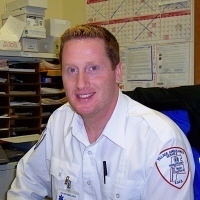
Shawn Godfrey is a certified paramedic and the operations manager for the Village Ambulance Service Inc. in Williamstown.
College Students and Drinking In 2002, at Duke University in Durham, N.C., student emergency medical technicians and paramedics began patrolling large parties on campus in search of anyone intoxicated enough to need on-site medical attention or immediate transportation to the emergency department. In Bethlehem, Pa., Lehigh University administrators are providing lists of undergraduates and their birth dates to bar/club owners in an effort to prevent students from using fake identification to buy alcoholic beverages. The university is also providing public service agencies the same list in order to record how many alcohol-related encounters a student may have with law enforcement or emergency medical service providers. In 2005, Vassar College’s Committee on College Life - a committee consisting of students, faculty, and administrators that addresses student life concerns not directly related to academics - introduced a “Good Samaritan Clause” to its rules on parties, drugs, and alcohol at Vassar. The clause encourages any student who is dangerously intoxicated to seek medical assistance, stating that “no student seeking medical treatment for his or her alcohol or other drug-related overdose, or assisting another student in obtaining such medical treatment, will be subject to College discipline for the sole violation of using alcohol or drugs or of providing alcohol or drugs to the student they have assisted in obtaining treatment.” The clause is meant to lessen the apprehension of those students who may hesitate to contact security, local law enforcement, or emergency medical services. Dangerous Consequences Heavy drinking by college students, long seen as a relatively harmless rite of passage, has unfortunately emerged as a major public health problem with dangerous consequences to both the drinkers and their fellow students. In 2002, the magnitude of these consequences was brought into clear focus when a federally appointed task force released staggering new statistics based on several large national surveys. According to the statistics, 1,400 students die annually in drinking-related accidents and another 500,000 are seriously injured. More than 600,000 students are assaulted each year by others who have been drinking and more than 70,000 are victims of alcohol-related sexual assault or “date rape.” Of course, these statistics do not begin to illustrate the incredible loss felt on campuses or among families when young people with promising lives are senselessly killed because of alcohol abuse. These students are unexpectedly dying or slowly killing themselves when their lives are beginning to flourish. These are people who might otherwise become our next political leaders, find cures for disease or, in the very least, get married and raise children of their own. Tragic Reports A search through Internet archives of the Chronicle of Higher Education produced the following stories of how at least 17 college students died from circumstances secondary to excessive alcohol use. Alcohol affected the judgment and abilities of the victims, who died by fire, drowning, falling, choking on their vomit, accident, bleeding to death and alcohol poisoning in eight U.S. states. Here is a brief report on their tragedies: 1. Radford, Va. -- Christopher Mirch, a senior at Radford University, had a blood-alcohol level of .25 (more than three times the drunk driving level of .08 in Virginia) when firefighters found him unconscious in a bathroom after his off-campus house accidentally caught fire at 2 a.m. He died of smoke inhalation. 2. Brunswick, Maine -- Cameron Brett, 20, a sophomore at the University of Maine, had a blood-alcohol level nearly twice the legal limit for driving when he fell three stories to his death while trying to climb onto the roof of Bowdoin College's Chi Delta Phi fraternity. 3. Chapel Hill, N.C. -- Four students with blood-alcohol levels of .14 to .20 were among five students killed when fire engulfed the Phi Gamma Delta house at the University of North Carolina. Fire officials suspect the fire was started by a cigarette tossed into a basement wastebasket. 4. Cohasset, Mass. -- Gregory Smith, 18, drove away from a drinking party at a local home and died when he crashed into a pole. 5. North Andover, Mass. -- Kyle Wentworth, 19, died when he was struck by a commuter train along the Merrimack River while playing an alcohol-fueled game of chicken. 6. Charlottesville, Va. -- Elizabeth McGowan, a senior at the University of Virginia, died with a blood-alcohol level of .25 when a fire ripped through her off-campus apartment. She died of smoke inhalation after a smoke bomb, which had been tossed into her apartment by two friends as a joke earlier in the evening, smoldered and finally caught fire after the party had ended and she had fallen asleep. 7. Frostburg, Md. -- John Eric Stinner, 20, a freshman at Frostburg State University, was found dead after drinking six to eight cups of beer and 12 to 14 shots of vodka at an unofficial, off-campus fraternity which had charged admission to its party. Seven students and a recent graduate of Frostburg State were charged with manslaughter in February 1997. 8. Oneonta, N.Y. -- Robert Jordan, 22, of Plymouth, Mass., a student at Hartwick College, drowned after falling into a river after a night of drinking. 9. Los Angeles, Calif. -- Two UCLA members of Lambda Chi Alpha drowned in Lake Mead after a drinking party. 10. Baton Rouge, La. -- Benjamin D. Wynne, a sophomore at Louisiana State University and a new pledge at Sigma Alpha Epsilon fraternity, had a blood-alcohol level of .588 and died of alcohol poisoning after a "bid night" party organized by his fraternity at a local bar. Campus police were called to the fraternity at 1:30 a.m. and found about a dozen students passed out. Four students, including Mr. Wynne, were taken to hospitals by paramedics. 11. Amherst, Mass. -- Adam Prentice, 21, a junior, had a blood alcohol level of .12 when he tried to climb the glass roof of a greenhouse at the University of Massachusetts. He fell through the glass and bled to death. 12. North Andover, Mass. -- Meaghan Duggan, 17, died after drinking heavily at a private party. She fell down the cellar stairs and fractured her skull. 13. Boston, Mass. -- Scott Krueger, 18, a freshman at the Massachusetts Institute of Technology living at Phi Gamma Delta, had a blood-alcohol level of .41 after a night of heavy drinking at the fraternity. He died of alcohol poisoning and choking on his own vomit. Factors, Prevention, and Intervention Despite attempts at many colleges to address heavy drinking through alcohol education and individual counseling, the percentage of U.S. college students who report a recent episode of "binge drinking" (five drinks at one sitting for a man, four for a woman) has remained steady at about 45 percent since researchers began measuring it in the early 1990s. The reason for the apparent lack of impact, according to a report by the Task Force on College Drinking of the National Institute on Alcohol Abuse and Alcoholism, is that patterns of college drinking are so embedded that they are likely to change only if broad efforts to alter the culture or social atmosphere on campuses and in surrounding communities are successful. Further research on campuses suggests that college traditions, peer pressure and alcohol advertising combine to give students unrealistic expectations of alcohol's positive social effects, as well as exaggerated estimates of how much the majority of other students actually drink. Besides educating and counseling students (activities that experts agree are important but that appear to have had little national impact), a variety of measures that include stronger and more consistent enforcement of alcohol policies and reducing students' access to cheap, plentiful alcohol are also necessary. Some campuses sponsor alcohol awareness events and classroom lectures and disseminate information about alcohol use. Although such education programs raise students' awareness of issues surrounding alcohol use, these programs appear to have minimal effect on drinking and on the rates of alcohol problems. Before any programs can be successful, students must be convinced that binge drinking is not an obligatory part of the “normal” college experience, and parents and college administrators must be convinced that it is possible for them to influence students' behavior. Resources: Task Force on College Drinking of the National Institute on Alcohol Abuse and Alcoholism Chronicle of Higher Education National Institute on Alcohol Abuse and Alcoholism Vassar College
If you would like to contribute information on this article, contact us at info@iberkshires.com.

Former Harry's Supermarket Under Construction for Restaurant

By Brittany PolitoiBerkshires Staff

PITTSFIELD, Mass. — Construction is underway to transform the former Harry's Supermarket into a restaurant

Late last month, the Conservation Commission greenlit some tree pruning on the property. New windows and a new door can be seen in the front of the building. 

"It's a substantial renovation that's currently underway here," Brent White of White Engineering said, speaking on behalf of the applicant and owner, Huajie Zhu. 

A fire gutted the longtime Wahconah Street supermarket in 2023, and the following year, Zhu purchased the property for $460,000 two years ago to build a restaurant with hibachi in the existing footprint of the more than 100-year-old building. 

White explained that the project has been ongoing for over a year, and the Community Development Board granted the property a waiver to reduce the minimum required number of parking spaces so that additional spaces aren't needed.  

He noted that, looking at the site plan, there is very little room to do so. A mirror will be installed near the sharp turn on Bel Air Avenue to alleviate traffic concerns. 

Pruning will be done on trees in the southeast corner of the existing paved parking lot, as a number of branches are hanging over. The new owners also intend to patch, sealcoat, and re-stripe the parking lot. 

A fire tore through the building less than an hour after the supermarket closed for the day three years ago. An automatic sprinkler system is required for the new use. 

View Full Story

More Stories
