| |
Daily Digest Ever think you'd see that price again? This was taken in Stamford but there are reports some North Adams' gas stations are that low as well. |
Like to Write?
Passionate about local sports? Into the environment? Obsessive about local meetings?
Let your neighbors know what's going on in Berkshire County! iBerkshires accepts submissions about local events, news and opinion pieces. There are openings for freelance work, too, for qualified candidates. E-mail tdaniels@iberkshires.com to find out more. |
Got Flu? Track its spread through Google! |
| Need to contact iBerkshires? Here's how. |
ObituariesWhat's Playing It's teen vampire love in the new film "Twilight," based on the best-selling series by Stephenie Meyer. |
Sales FliersColumnists | Independent Investor
|
Other StuffRelated Stories |
| |
EMS: Courage and Compassion in ActionBy Shawn Godfrey - July 30, 2007
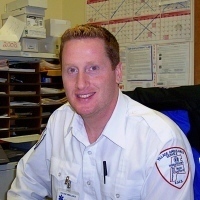
 | | Shawn Godfrey is a certified paramedic and the operations manager for the Village Ambulance Service Inc. in Williamstown. | Growing Pains

Yes, I admit it. I have been a long-time fan of mixed martial arts competition (MMA) and all its malevolent trappings for quite some time now. I look forward to the $40 pay-per-view events and the Friday night broadcast of the Ultimate Fighting Championship (UFC) on the cable network, Spike. I relish the moment when I can sit back, sip a beer, and watch two men battle it out for three five-minute rounds.
One may call it a morbid curiosity or even a blatant affinity to senseless violence, but for me, it’s about watching two professionals competing in a test of strength, endurance, and skill. Knowing the hours they put into training, the diet regimens they follow and the discipline required makes a bout more than just a simple fist-fight.
Since covering my first MMA event as a paramedic in 2004, I was completely hooked on the bruising sport. Like most fans, I am not a practitioner of any of the disciplines, making it difficult for me to fully appreciate or accurately dissect the true meaning of the sport and its individual athletes.
So then, you ask yourself, why is a paramedic writing about MMA? I suppose it’s my two cents to help demonstrate that mixed martial arts is one of the very few combat sports boasting a relatively small number of injuries and, more notably, zero deaths related to the sport. I have treated more injuries from a variety of “socially acceptable” sporting contests, like skiing and football, than during sanctioned MMA events.
What is MMA?
Mixed Martial Arts (MMA) is a general term used to describe the mixing or combining of martial arts styles to form a single effective fighting art. Methods of fighting are usually combined using one stand-up fighting art, and one ground fighting art. However, there are no set rules as to which arts can be mixed. This depends on the individual martial artist and what type of fighting they prefer.
With the recent popularity of reality shows like The Ultimate Fighter and Tapout, and the televised bouts between warriors of the UFC and the Pride Fighting Championship, a growing number of people are being exposed to a sport that, just in the early 1990s, was once considered too graphic for mainstream media, banned in most states, and even likened to “human cock-fighting” by Arizona Senator John McCain.
Fortunately, most MMA organizations have cleaned up their act since.
Their owners have gained sanctioning and approval from respected state athletic commissions and have outlawed tactics such as head-butts and punches to the groin, to name a few. Yet, MMA still appears to be ranked above any other contact sport being practiced in terms of brutality.
Requirements
MMA fighters in the United States now must pass all the pre-fight screening tests of professional boxers and are supervised by referees and ringside physicians. It is important not to group together MMA competitions with the infamous “Toughman” or “Strongman” competitions (a “sport” that matches amateur participants against trained fighters using “one size fits all” protective gear and often supervised by untrained medical staff) when comparing MMA to other combat sports. While MMA has never had a casualty in the United States, at least 12 deaths have resulted from Toughman competitions.
Injury Prevalence
Severe injuries within the MMA field are extremely rare due to the strict rules and regulations that are applied to events. The sport of MMA is much safer than other contact sports such as boxing, football and hockey. There has never been an instance of a fighter that was paralyzed, crippled or suffered from brain damage. This is a remarkable record considering the high rate of severe injuries associated with other well accepted contact sports, like boxing. MMA has had less incidents of injury than even non-contact sports such as tennis, skiing and baseball.
The most severe injury ever recorded stands out only because there are no other injuries on record. In this incident, a fighter was taken down and body-slammed against the floor by his opponent. As the fighter hit the floor, he was knocked out immediately. After examination by a doctor, it was determined that he had a broken collarbone and a small fracture in one of his vertebrae. Those injuries have since healed completely and the fighter continues to compete in sanctioned MMA events.
Safety
Rules and safety regulations vary from organization to organization. However, it is important to list some of the procedures and precautions taken to insure the health and well-being of the fighters at all times. Here is a list of some general safety regulations that are used by many of these MMA organizations and help to insure the safety of all MMA practitioners.
· Padded gloves (typically 4 oz to 6 oz in weight and made of soft leather) are used as a means to protect the fighters hands from being damaged while striking.
· Striking is almost never allowed to the back of the head, neck or spinal cord area.
· There is no standing count when a fighter is knocked out. Once a fighter is unconscious, even if for only a second, the match is stopped immediately. Often times, the fight will be stopped even if the fighter is only dazed.
· Often there are events that do not allow kicking of an opponent while he is down.
· The fight can and will be stopped by a doctor or referee if a fighter cannot intelligently or coherently defend himself.
· The fighters corner-man can also throw in a towel, causing the fight to stop immediately, if it is determined that a fighter cannot continue.
· A fighter can tap the mat or his opponent at any time, indicating that he wishes to end the match and stop fighting.
· Before a fighter competes, he is given a thorough examination by a professional doctor. The doctor will insure that the fighter is in good health and able to compete in this type of event.
· In full contact matches, the fighters are usually tested for communicable diseases such as HIV and Hepatitis.
Illegal Moves/Techniques
This section contains illegal moves/techniques when competing in an MMA event.
Butting with the head
Eye gouging of any kind
Biting
Hair pulling
Fish hooking
Groin attacks of any kind
Putting a finger into any orifice or into any cut or laceration on an opponent
Small joint manipulation
Striking to the spine or the back of the head
Striking downward using the point of the elbow
Throat strikes of any kind, including, without limitation, grabbing the trachea
Clawing, pinching or twisting the flesh
Grabbing the clavicle
Kicking the head of a grounded opponent
Kneeing the head of a grounded opponent
Stomping a grounded opponent
Kicking to the kidney with the heel
Spiking an opponent to the canvas on his head or neck
Throwing an opponent out of the ring or fenced area
Holding the shorts or gloves of an opponent
Spitting at an opponent
Engaging in an unsportsmanlike conduct that causes an injury to an opponent
Holding the ropes or the fence
Using abusive language in the ring or fenced area
Attacking an opponent on or during the break
Attacking an opponent who is under the care of the referee
Attacking an opponent after the bell has sounded the end of the period of unarmed combat
Flagrantly disregarding the instructions of the referee
Timidity, including, without limitation, avoiding contact with an opponent, intentionally or consistently dropping the mouthpiece or faking an injury
Interference by the corner
Throwing in the towel during competition
Common Injuries
This section contains a list of common injuries that have been associated with training in MMA or competing in an MMA event.
Hand Injuries
Injuries to the hand do occur during training and while competing in an MMA event. It is possible to “jam” a finger against the mat or training partner where the result is usually swelling and pain in the affected digit. This type of injury usually heals very quickly, within a few days or weeks, and regular training can immediately resume despite the injury.
Hand and wrist fractures do not usually occur during regular sparring or training; however, it is not uncommon for a fighter to strike an opponent in a hard section of the body or head, causing some the bones in the hand to fracture. The injuries are not usually of a permanent nature and heal normally when placed in a regular cast.
On rare occasions, a hand can be broken severely enough to require pin placement inside the hand for the bone(s) to heal properly. In most cases, a simple soft or hard cast will keep the hand immobile enough to enable proper healing.
Head and Neck Injuries
The danger of injuries to the head and neck are minimized by strict rules that govern training and MMA events. Strikes to the back of the head and neck are usually forbidden; however, there is the rarity that such an injury may occur from a well-placed strike, hard throw, or other such traumatic application of force. There are no documented severe spinal or neck injuries in any MMA event. Concussions are also rare among MMA events.
Joint Hyperextension Injuries
An injury that often occurs during training or participation in an MMA event is the hyperextension of a joint or limb. This typically happens when a submission hold, such as arm-lock or knee-bar is applied, but the opponent refuses to submit (another word for surrender). The arm or leg is rarely broken, although the joint is extended beyond the range of motion. The joint can become inflamed and it will be accompanied by pain in the tendon that controls motion of the joint. The care received depends upon the extent of the injury, and whether or not the injury is in the tendons around the joint, or in the bone itself.
Choke Related Injuries
There have been no injuries associated with the use of chokes in any American sanctioned MMA event. Restriction of blood to the brain, which is the main function of applying a carotid artery choke, has been proven to be safe when applied properly and for the correct amount of time. Martial arts professionals intricately teach the safety and proper application of chokes through extensive training. There have been documented cases of injury and/or death within the martial arts field outside of sanctioned events; however, these cases are limited and were brought about as a result of a lack of understanding of chokes and medical supervision as well as improper training.
The Future
So, if I was unable to convince you that MMA is a legitimate sport, the more than $200 million grossed in customer revenue in 2006 is proof that its fan base is certainly growing.
Whether legitimate or not, it’s not everyday that one is able to watch a sport grow from relative extinction to the level of popularity that MMA has in such a short period of time. There will definitely be growing pains for the industry and the fighters, and it should be interesting to see how the sport progresses in the upcoming years.
Sources:
www.canuckles.com
www.mma.tv
www.ufc.tv
|
| Although I agree with Senator McCain that this sport is like human cock-fighting, I learned a lot from reading this column and no have a better understanding about how safe it can be. | | from: Gregory | on: 08-11-2007 |
|
Shawn,
Thank you for writing the article on MMA. I especially enjoyed reading the section on "Illegal Moves/Techniques" as I didn't think such a catagory existed for MMA. My 19 year old nephew is completely hooked on MMA and states that its participants are "real athletes". I will now be more in-the-know as a result of reading your artical and can sound more articulate when discussing MMA and Ultimate Fighting with my nephew.
| | from: V-648 | on: 07-30-2007 |
|
| It's funny you wrote this article. I'm an EMT and a fighter and often find myself treating my teamates for minor injuries. | | from: Jorge | on: 07-30-2007 |
|
Once again, great story Shaun!
I know I speak for many of us when I say, I would love to see you "in the ring", perhaps demonstrating those pre-EMT moves against your brother? | | from: EMS Stalker | on: 07-30-2007 |
|
| I have been a fan of MMA for quite some time now. (Even longer than you, I think, Shawn!) I enjoyed your article on this sport. It takes a great deal of discipline and skill for these athletes to do what they do in the "octagon". I hope your article encourages some people to watch at least once. Who knows, they may get hooked too! ;) | | from: wag | on: 07-30-2007 |
|
|
Enter your email address below to receive our FREE iBerkshires.com Newsletter
|