EMS: Courage and Campassion In Action

By Shawn GodfreyPrint Story | Email Story
Shawn Godfrey is a certified paramedic and operations manager for the Village Ambulance Service in Williamstown, MA
When A Cough Is Not Just A Cough Since the overwhelming media-attention paid to Andrew Speaker and his dangerous strain of Tuberculosis (TB) is spreading faster than the disease itself, I figured I would jump on the proverbial band-wagon (or airplane, if you will) in order to offer you insight from a paramedic’s point of view. After all, emergency medical providers run the risk of exposing themselves to a myriad of infectious diseases on a daily basis, including TB, and are required to undergo yearly screenings for many of these latent or active illnesses. While I do believe the media generates a lot of excitement around the Speaker case, elevated concern should exist regarding the dangers for the spread of TB; however, I feel the media could do a better job in conveying the information rather than simply frightening laypeople into using unnecessary preventative tactics or isolation measures to cope with the risks. What Is TB? TB is spread when microscopic bacilli (rod-shaped bacterial droplets) from the respiratory tract of an infected person enter the air and are inhaled by another person. Modes for droplet expulsion include coughing, sneezing, speaking, singing, or laughing. Only people in the “active” phase of the disease are contagious. The disease is not likely to be transmitted through personal items belonging to those with TB, such as clothing, bedding, or other items they may have physically come into contact with. Unfortunately, the bacteria associated with TB can often fool the body’s immune system, thus suppressing the infection so that an individual doesn’t experience any symptoms; however, the “germ” is not completely eliminated from the body. This is classified as a “latent” infection. People who have a latent TB infection usually do not present with any symptoms and cannot spread TB to others. Tuberculosis becomes detrimental when the latent infection turns "active." In active TB, the affected individual may cough, feel generally weak and fatigued, and suffer excessive unhealthy weight loss. The active form of TB is contagious. Some people develop active TB soon after becoming infected and before their immune system can fight the TB bacteria. Other people may get sick later, when their immune system becomes weak for another reason. TB is more common and deadly in the third world and is currently listed in the United States as a "rare disease" by the Office of Rare Diseases (ORD) of the National Institutes of Health (NIH). This means that TB, or a subtype of TB, affects less than 200,000 people in the U.S. population. Because most infected people expel relatively few bacilli, transmission of TB usually occurs only after prolonged exposure to someone with active TB. Researchers have estimated, on average, people have a 50 percent chance of becoming infected with TB if they spend eight hours a day for six months or 24 hours a day for two months working or living with someone with active TB. Preventative Measures Due to relatively short transport times, emergency medical responders have limited contact with high-risk or already-diagnosed TB patients; however, provider safety measures during transit should include: Covering the patient's nose and mouth with a mask is essential. A disposable micron surgical mask is best, but a standard surgical mask or even an oxygen mask is helpful. The nature of the medical treatment required by the patient should determine which mask is used. A disposable micron mask or disposable particulate respirator (PR) should be worn by the provider. It should fit snugly on the face. A beard or mustache will significsantly reduce the effectiveness of such protection. Ensuring good ventilation in the patient compartment of the ambulance can lessen the number of infectious droplets in the air. Thus, the ventilation system should be maximized and/or side windows opened to provide a steady source of clean air. Which Patients Should Receive Respiratory Precautions? Patients with respiratory symptoms of more than 2 weeks duration or any patient with a respiratory symptom for any duration and who is a member of a higher risk group. The Center for Disease Control (CDC) defines high risk groups as follows: Alcoholics IV drug users Contacts of patients known to have active TB Low income populations Prisoners HIV infected persons Nursing home residents Refugees Persons with other pre-existing medical conditions which compromise the ability to fight infection are also at increased risk. Such conditions include: Chemotherapy Diabetes Steroid Therapy Renal failure Some types of cancers Clearly, TB patients receiving aerosolized medications, like those used for asthma or chronic lung disease, are likely to spread infectious droplets. In such patients, as well as those presenting with respiratory symptoms such as a persistent cough, special attention should be given to these precautions by EMS providers. Since air-borne droplet spread is the only means of TB transmission, it is not necessary to disinfect the ambulance or equipment; however, most services mandate their staff follow aggressive decontamination procedures as a preventative measure. Current medical science does enable ways for preventing TB, and it can cure most cases of the disease, but TB is still far from beaten. The major problem rests in the need for early diagnosis of unrecognized or latent infection. Also, early treatment must be initiated to prevent the disease from exacerbating, and to keep patients from unknowingly infecting others around them. I hope this column has answered a few, or better yet, many of your questions regarding Tuberculosis. I am off to finish constructing my disease-proof concrete bunker. See you in a week! Sources: http://www.health.state.ny.us http://www.wrongdiagnosis.com http://www.cdc.com
If you would like to contribute information on this article, contact us at info@iberkshires.com.

Williamstown Board Opts to Negotiate with College on Water St. Lot

By Stephen DravisiBerkshires Staff

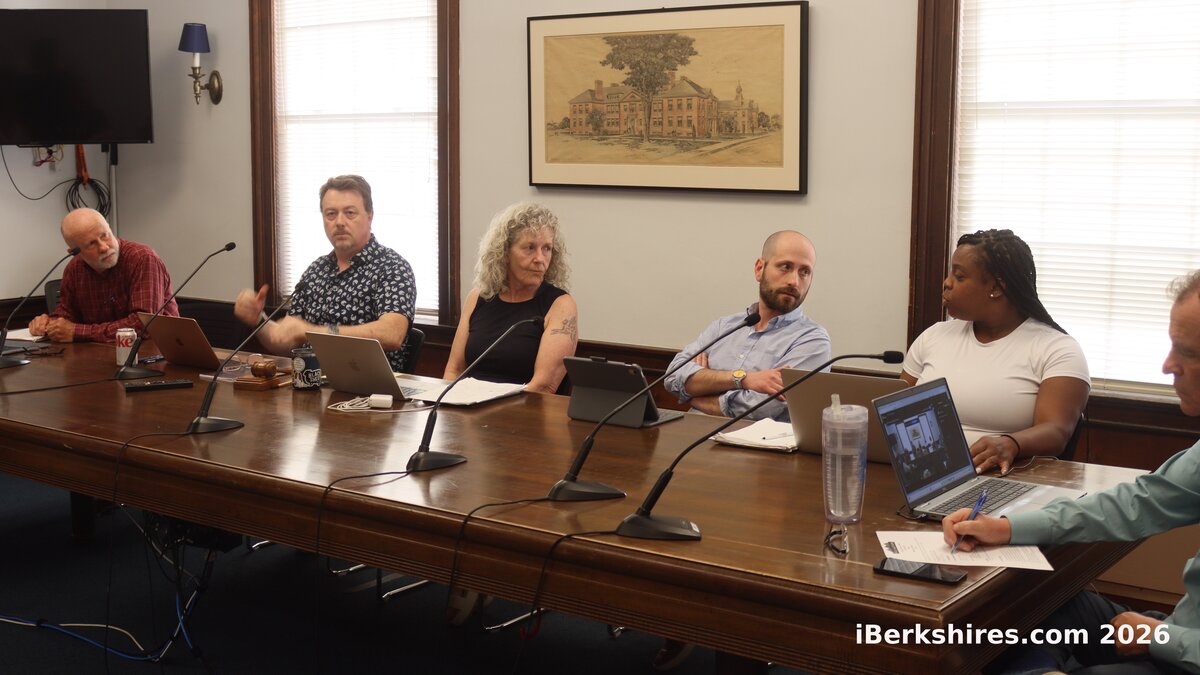
Newly elected board member Nate Budington, far left, participates in his first in-person meeting along with, from left, Matt Neely, Stephanie Boyd, Peter Beck, Shana Dixon and Town Manager Robert Menicocci.
WILLIAMSTOWN, Mass. — The Select Board on Monday decided to enter into negotiations with Williams College on the sale of the vacant town-owned lot at 59 Water St.
 
But the board members made it clear that the college's proposal to acquire the lot is a starting point, not a final deal that the elected officials would accept.
 
"For the sake of continued conversation, I'm in favor of [awarding Williams the site], but if this process wasn't continued with the opportunity for further negotiation, I wouldn't vote to continue this," Peter Beck said. "I think that next step is necessary for us to get to a yes on this."
 
"I think there's wide agreement on that," Matthew Neely said just before the 5-0 vote to enter talks with the college.
 
Williams was the sole respondent to a town-issued request for proposals to develop the former town garage site, currently a dirt lot.
 
The college's stated intent is to build a new Facilities office and create up to 170 parking spaces at 59 Water Street. That use will allow the college to redevelop the current Facilities building site and parking lot as part of a reconception of the school's indoor athletic and recreation facilities.
 
Under the terms of the RFP, the college's proposal was subjected to review by an ad hoc advisory committee to the town manager, who brought the question to the Select Board. That board will have the final say on any purchase and sales agreement.
 
View Full Story

More Williamstown Stories